
We do migrations in both directions. QuickBooks to NetSuite, when a company has outgrown it. NetSuite to QuickBooks, when a company was sold more platform than it needs. Most firms in this market only do the first one, because their next client comes from Oracle. Ours don’t, so we can tell you the truth about which direction you should be going.
QuickBooks to NetSuite
Led by Renee, who moved acquired companies from QuickBooks into NetSuite OneWorld as a CFO before she did it as a consultant. The parts that get skipped are the parts that hurt later: beginning balances, opening inventory, intercompany, and the fine-tuning nobody budgets for after go-live.
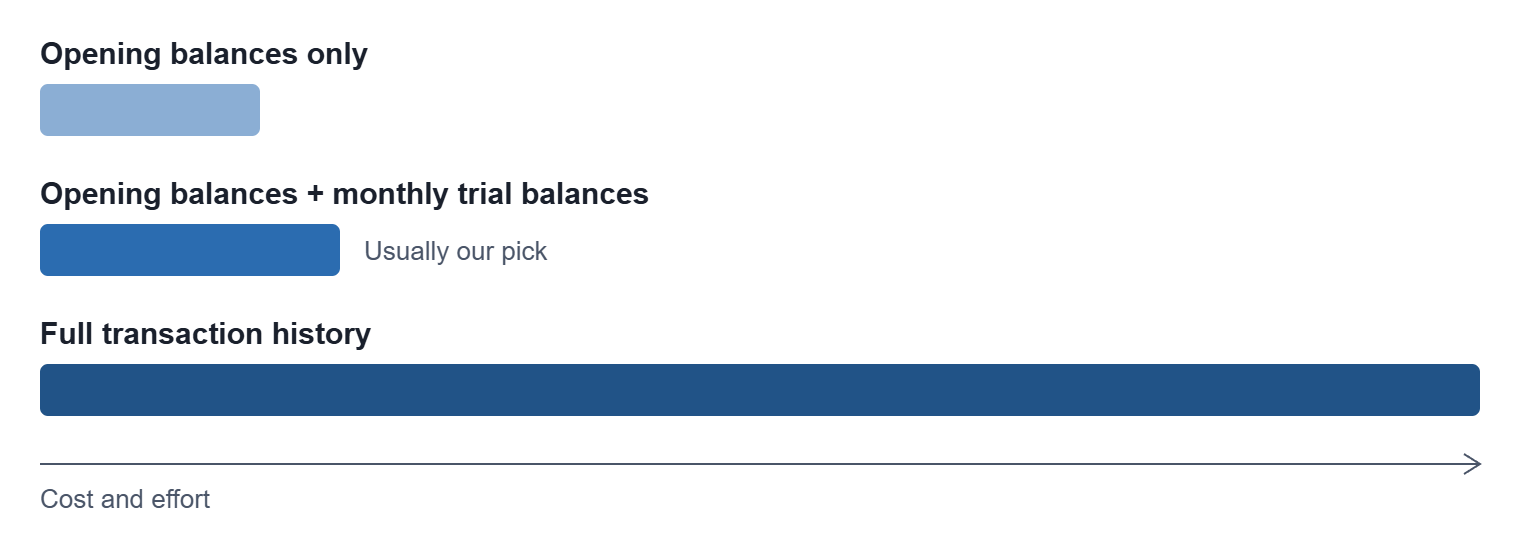
- Moving from QuickBooks to NetSuite — how much history to bring, mapping the chart of accounts, open AR and AP, inventory, and picking a cutover date.
- Tying out a QuickBooks to NetSuite migration — balance it twice, at the initial load and at cutover.
- Intercompany balances when moving from QuickBooks to NetSuite — due to and due from, entities that aren’t subsidiaries, elimination.
NetSuite to QuickBooks
Sometimes the right answer is less software. If NetSuite is costing more than it returns, we’ll say so, and we’ll move you. The clock matters here: once the contract ends, so does your access, and some of what you need isn’t in an export you can run in an afternoon.
- Leaving NetSuite? Get your data out before the contract ends — financials, transactions, documents, the audit trail, and the customizations you’ll want for the record.
Either way
Both directions are scoped projects, not fixed-price cards, because they depend on your data and how you operate. Bring the question to the free hour and we’ll tell you what it would take — including whether to do it at all. We take no referral or commission from either vendor, so there’s nothing in it for us either way.
The first hour is free. Bring us the thing that’s been bothering you and we’ll spend an hour on it with you, in your account, and send written notes afterward whether or not you hire us.